Cosmetic consultations
Understanding facial lines and how skin ages
Lines are a normal part of skin ageing, and every adult face has them to some degree. They change gradually with time, sun exposure, habits and genetics. This page explains how lines form, what can support the health of your skin, and what an assessment at Oak involves. It is general information for adults, not personal advice, and it does not replace a consultation with a registered health practitioner.
Understanding it
How facial lines form as skin ages
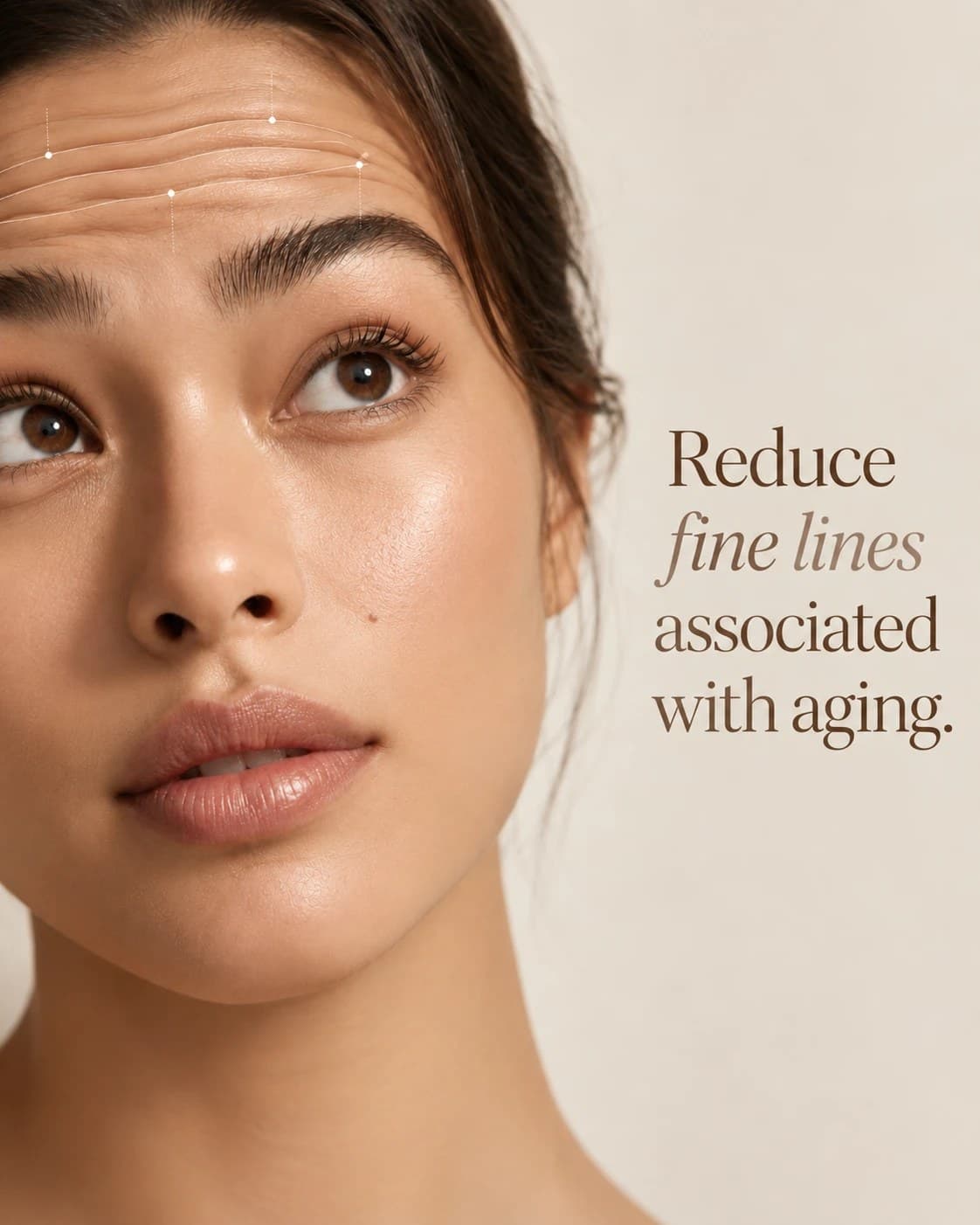
Skin creases wherever it folds, whether from everyday expressions, a pillow pressed against your cheek or dry air. Younger skin is thicker, better hydrated and more elastic, so it springs back. Over many years, as the skin thins, holds less water and loses elasticity, some of those creases stop springing back and stay. Fine, criss-cross lines from dryness and creases from sleeping on the same side each night are different again. Most faces show a mix of these, and this is a normal part of ageing, not a flaw.
The outer layer of skin, the epidermis, is a protective barrier that holds in water. Beneath it, the dermis contains collagen, which gives skin strength, and elastin, which lets it recoil. From early adulthood the body makes new collagen more slowly, cell turnover slows, the skin gradually thins and oil production falls. After menopause, skin collagen declines more noticeably. These changes happen to everyone, at different rates, and they are the main reason lines become more visible with age.
Ultraviolet (UV) light speeds these changes up. UVA in particular reaches the dermis, where it accelerates the breakdown of collagen and damages elastic fibres, a process known as photoageing. It shows as deeper creasing, rough texture, uneven colour and small visible blood vessels. Queensland has some of the highest UV levels in the world, and much of our exposure is incidental. Unlike time or genetics, sun damage is largely preventable, which is why daily sun protection matters at any age.
Contributing factors
What shapes facial lines over the years
Sun exposure
UV damage adds up over a lifetime, and much of it happens during everyday activities such as walking to the car, driving or sitting near a window. Over years it shows as creasing, roughness and uneven colour. Sun damage also raises skin cancer risk, so regular skin checks with your general practitioner (GP) matter as much as appearance.
Time and hormones
Intrinsic ageing happens to everyone. Cell turnover slows, the skin thins and it holds water less well. Falling oestrogen around menopause is linked to a faster loss of skin collagen, which is why many women notice changes in their late forties and fifties.
Sun glare and sleep position
Squinting in bright light and sleeping on the same side each night fold the skin in the same places, year after year. Sunglasses that meet the Australian Standard reduce squinting outdoors. Sleep creases often run in a different direction to other lines, and changing sleep position may help.
Smoking
Smoking narrows small blood vessels, reduces oxygen to the skin and speeds the breakdown of collagen. People who smoke tend to show earlier and deeper lines, including around the mouth. Quitting benefits your skin as well as your overall health, and Quitline offers free support on 13 QUIT (13 7848).
Genetics and skin type
Skin thickness, oil production and colour are largely inherited. Fair skin that burns easily tends to show sun damage earlier. Skin with more melanin has more built-in UV protection, but is more prone to pigment change after irritation or inflammation.
Hydration and environment
Dry, dehydrated skin shows fine, criss-cross lines that often look less obvious when the skin barrier is well moisturised. Air-conditioning, wind, long hot showers and harsh cleansers all draw water from the skin.
Your consultation
How your skin and lines are assessed
Your consultation is with Kirby Shannon (NMW0002042639), Registered Nurse (Division 1), general registration with the Australian Health Practitioner Regulation Agency (Ahpra). Kirby has more than ten years' experience in cosmetic and skin practice. She works within Oak's doctor-led team. If another team member would carry out any skin treatment, you are told who they are and their qualifications. The aim is to understand your health, your skin and your concerns before any option is discussed, including the option of no treatment.
- Your health history, medicines, allergies, pregnancy or breastfeeding, and any skin conditions, such as rosacea, eczema, acne or recurrent cold sores
- The lines and texture you are noticing, and whether they relate mainly to sun damage, dryness, sleep position or thinning skin
- Skin quality, thickness and elasticity, and signs of sun damage such as pigment, redness and roughness
- Your skin type and how it tends to respond to heat, light and inflammation, including your risk of pigment change
- Your sun exposure, current skincare and when you last had a skin check. A changing or unusual spot is referred to your GP for assessment first
- What is bothering you, why now, what you hope will change, and how much time, recovery and cost you can realistically allow
- Your wellbeing. If concerns about appearance are causing significant distress, Kirby may suggest talking with your GP or a psychologist before any cosmetic procedure
Approaches we may discuss
What may help with facial lines
Lines are a normal part of skin ageing, and treatment is not required. For many people the most useful changes start at home, with sun protection and skincare. In-clinic skin treatments aim to improve the quality of the skin, such as texture, fine lines and sun damage. Change is usually gradual and modest, long-standing creases usually change little, and results vary between individuals.
Daily sun protection and a home-care plan
Broad-spectrum, water-resistant SPF 50+ (SPF 30 at a minimum) sunscreen, applied every morning and reapplied every two hours outdoors and after swimming, sweating or towel-drying, alongside an SPF 50+ lip balm (SPF 30 at a minimum), a hat, sunglasses and shade. A long-running trial in Nambour, Queensland, found that adults under 55 who applied sunscreen daily showed less skin ageing over four and a half years than those who used it at their own discretion. A skin consultation can add a practical routine, which may include a moisturiser for barrier support and ingredients such as retinol or vitamin C, introduced slowly to limit irritation. Retinol is usually avoided during pregnancy.
Learn moreMicroneedling and RF skin treatments
Microneedling uses a sterile device to create many tiny, controlled channels in the skin, prompting a wound-healing response that can support new collagen. Radiofrequency (RF) devices heat deeper layers of the skin in a controlled way to encourage collagen remodelling. Both are usually done as a course spaced several weeks apart, any change develops gradually over months, and maintenance is usually needed. For some people they may improve texture and fine lines; for others the change is small. Microneedling usually causes redness, swelling and sensitivity for 1 to 3 days, sometimes longer, with possible pinpoint bleeding or bruising. RF usually causes redness and warmth for a few hours to a day or two, with swelling occasionally lasting longer.
Learn moreIn-clinic chemical peels and clinical facials
In-clinic chemical peels remove surface layers of skin to a chosen depth. Light peels may improve texture and dryness-related fine lines; expect redness for hours to a day, then flaking for a few days. Stronger peels cause visible peeling, sometimes crusting, for a week or more, carry higher risk and are not suitable for everyone. Clinical facials, including HydraFacial, can help with hydration, though any effect on fine lines is temporary.
Learn moreIPL for sun-related spots and redness
Intense pulsed light (IPL) targets brown spots and redness from sun damage. It does not treat lines directly. It is not suitable for tanned skin, and it is often unsuitable for darker skin types because of the risk of burns and pigment change. Expect redness for hours to a day or two; treated pigment darkens then flakes over 1 to 2 weeks. A course is usually needed, and without daily sun protection new spots can appear.
Learn moreA plan built from your assessment
After your assessment you receive a written plan specific to you. It may combine home care with in-clinic skin treatments, suggest a staged approach, or recommend waiting. Each option is explained with its risks, expected recovery, how long any change may last and the full costs, including maintenance, before you decide. A cosmetic procedure is a serious decision, and you are welcome to take the plan away, think it over or seek a second opinion.
Learn moreChoosing no treatment, or a referral elsewhere
Choosing not to have treatment is a valid outcome of a consultation, and sometimes it is Kirby's advice. If something needs a different kind of care, such as a changing spot or a skin condition, Kirby will explain why, and will refer you to your GP, another doctor or an emergency department when a medical assessment is needed. Seeing a dermatologist usually starts with a referral from your GP. If concerns about appearance are causing distress, talking with your GP or a psychologist may help more than any cosmetic procedure.
What to expect
Your visit, from first conversation to review
- 01
Consultation
You meet with Kirby for a conversation and skin assessment. With your consent, clinical photographs may be taken for your medical record only. There is no expectation to proceed. Cosmetic consultations at Oak are for adults aged 18 and over.
- 02
Your written plan
Your options are set out in writing, including who would carry out each treatment and their qualifications, the risks, recovery, the likely number of sessions and the full costs. How much change you see, and how long it lasts, varies between people, and this is explained before you consent. You can take as long as you need to decide.
- 03
Preparing your skin
Before microneedling, peels, RF or IPL you may be asked to follow a preparatory skincare routine, pause some active products and avoid tanning. A patch test may be recommended before some peels and light-based treatments. Let us know if you are pregnant, breastfeeding or have recently changed any medicines, as some treatments may need to wait.
- 04
On the day and recovery
Skin treatments begin with cleansing and a check that your skin is ready. Sensations vary from warmth or prickling to stinging or heat, and some people find treatment clearly uncomfortable; pain differs between people. Recovery depends on the treatment. It ranges from redness for a few hours to a day or two after RF, to a week or more of visible peeling, sometimes with crusting, after a stronger peel, and the expected recovery for your treatment is set out in your written plan. You will usually need to avoid exercise, heat, swimming and make-up until your skin has settled, which can take from a day to a week or more depending on the treatment, and to protect your skin from the sun.
- 05
Aftercare and review
You leave with written aftercare instructions specific to your treatment, and details of who to contact if you are concerned. A review appointment checks healing and progress, and your plan is adjusted, paused or stopped depending on how your skin responds and what you want.
Risks & recovery
Risks of peels, microneedling, RF and IPL
All cosmetic procedures carry risk, including skin treatments. The risks below apply to the skin treatments discussed on this page. Your own risk depends on your skin type, health and history, and is explained in full before you consent. Recovery ranges from a few hours of redness to a week or more of peeling or healing, depending on the treatment and its strength.
- Redness, swelling, tenderness and sensitivity are common after microneedling, peels, RF and IPL. They usually settle within hours to days, but can last longer. Microneedling can also cause pinpoint bleeding or bruising.
- Pigment change: darkening of the skin (post-inflammatory hyperpigmentation) or, less often, lightening. It is more likely in darker skin types or with sun exposure after treatment, can take months to fade and is occasionally permanent.
- Burns, blistering, crusting or, rarely, scarring from heat, light or peel solutions. The risk is higher with stronger peels, higher device settings and on tanned skin.
- Heat-based and focused ultrasound devices have also rarely been reported to cause numbness, which is usually temporary, and loss of fat under the skin, which can leave a hollow and may be long-lasting.
- Infection, including a flare of cold sores in people who have had them before.
- Breakouts, small white cysts (milia), or a flare of rosacea, eczema or acne.
- Irritation or allergic reaction to products used during or after treatment and, rarely, persistent inflamed lumps (granulomas) after microneedling.
- Eye injury from light-based devices, which is why protective eyewear is worn throughout, and unintended hair reduction in areas treated with IPL.
- Change may be modest or less than you hoped. Results vary between individuals, most skin treatments need a course and ongoing maintenance with continuing costs, and normal ageing continues.
When to seek urgent care
After any cosmetic procedure, wherever you had it, call 000 or go to your nearest emergency department if you have difficulty breathing, swelling of the lips, tongue or throat, or a sudden change in your vision. Contact the clinic that treated you, or your GP, promptly if you have severe or worsening pain, fever, spreading redness, heat, pus, blistering or a wound that is not healing. If you are unsure how urgent a symptom is, 13 HEALTH (13 43 25 84) gives 24-hour health advice from registered nurses in Queensland.
Questions to ask before a skin treatment for lines
- Who will perform the procedure, what are their qualifications and training, and what type of registration do they hold? You can check a registered practitioner on the public register at ahpra.gov.au. Not everyone who performs skin treatments is a registered health practitioner, so ask about training too.
- What change is realistic for my skin, how long might it last, and what maintenance would it need?
- What are the alternatives, including no treatment and non-cosmetic options?
- What are the specific risks for my skin type, how often do they happen, and how would a complication be managed, including after hours?
- What recovery should I plan for, including time off work, exercise limits and sun avoidance?
- What is the full cost, including a course of treatments and any ongoing maintenance, and what is the cancellation and refund policy?
- Is the device included in the Australian Register of Therapeutic Goods (ARTG) for this use, and if a laser or intense pulsed light (IPL) device is used, does the operator hold any licence your state requires?
Why do lines become more noticeable with age?
Younger skin is thicker, holds more water and has more collagen and elastin, so it springs back after it creases. Over time, and faster with sun exposure and smoking, the skin thins and loses elasticity, so creases from dryness, sleep position and everyday expressions begin to stay. This happens to everyone at different rates and is a normal part of ageing.
Do I need to do anything about lines?
No. Lines are a normal part of skin ageing, and every face has them to some degree. Whether you do anything is a personal choice. Many people focus on sun protection and skincare, and choosing no treatment at all is a reasonable decision.
Can skincare make a difference?
It can, within limits. Daily broad-spectrum sunscreen has good evidence for reducing further sun-related skin ageing. Moisturisers can make dryness lines less obvious, and ingredients such as retinol may improve fine lines and texture over months of regular use, though they can irritate at first and are usually avoided in pregnancy. Skincare will not erase established creases.
Can microneedling, peels or RF remove deep lines?
They are unlikely to. These treatments aim to improve the quality of the skin and are better suited to fine lines, texture and sun damage. Long-standing creases usually change little, and they are a normal feature of an ageing face. Any change is gradual, results vary between individuals, and what is realistic for your skin is discussed at your assessment.
How much time off will I need after a peel, microneedling, RF or IPL?
It depends on the treatment and its strength. After a light peel, expect redness for hours to a day, then flaking for a few days. A stronger peel causes visible peeling, sometimes crusting, for a week or more, which may mean time away from work or social plans. Microneedling usually causes redness, swelling and sensitivity for 1 to 3 days, sometimes longer, with possible pinpoint bleeding or bruising. RF usually causes redness and warmth for a few hours to a day or two, with swelling occasionally lasting longer. After IPL, redness lasts hours to a day or two, and treated pigment darkens then flakes over 1 to 2 weeks. You will usually need to avoid exercise, heat and make-up until your skin has settled, which can take from a day to a week or more depending on the treatment, and to take extra care in the sun for several weeks afterwards.
Who are cosmetic consultations at Oak for, and what do they cost?
Cosmetic consultations at Oak are for adults aged 18 and over. The consultation fee is shown before you confirm your booking, and the costs of any treatment are provided in writing after your assessment, before you decide anything.
Other areas we assess
- Facial shape & proportionRead more
- Lips & perioral areaRead more
- Under-eye & mid-faceRead more
- Skin quality & hydrationRead more
- Review & correctionRead more
This page is general information only and is not a substitute for individual medical advice. Cosmetic consultations are for adults aged 18 and over. Treatment is only offered where clinically appropriate following an in-person consultation with a registered health practitioner. All cosmetic procedures carry risks, and results vary between individuals.